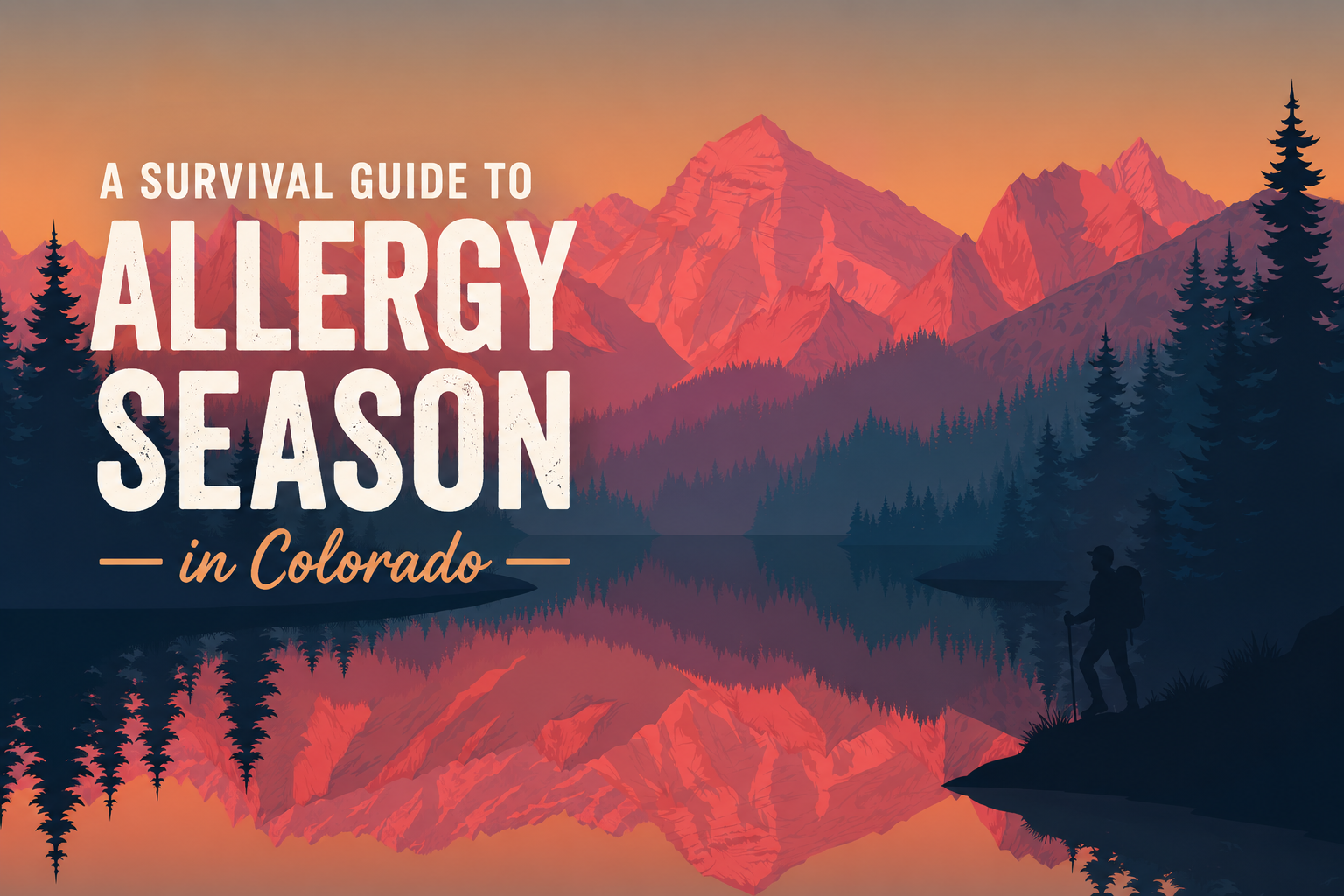
A Survival Guide to Colorado Allergy Season
Many people experience allergies in Colorado due to its dry, windy climate. See when tree, grass and weed pollen peak in Colorado, including a month-by-month allergy calendar and practical ways to manage symptoms.

Colorado allergy Season generally lasts from February to early October or until the first winter frosts. However, indoor allergens such as dust mites, mold, and pet dander may persist in the winter.
Colorado is often considered a better state for allergy sufferers than other parts of the United States due to the region’s dry climate and elevation. (1, 2)
That said, Colorado is not allergy-free, and allergy sufferers in the state can experience severe allergies, especially in the spring and summer months. Recently, Colorado Springs was ranked among the top 20 worst cities for allergy sufferers. (3)
Colorado offers some of the most beautiful outdoor experiences in the country, especially in the warmer seasons, from hiking mountain trails to exploring alpine lakes.
If you are an allergy sufferer living in Colorado, seasonal allergies can leave you sneezing, congested, or stuck indoors.
Quello allergy drop can help you enjoy everything the state has to offer without allergies getting in the way by retraining your immune system to respond better to seasonal allergens and providing long-term relief.
Common Allergens in Colorado
Allergens are substances that trigger an allergic reaction, leading to symptoms such as a runny nose, itchy eyes, or nasal congestion.
Some common Allergens in Colorado include:
Tree Pollen: Cedar, Cottonwood, Aspen, Juniper, Elm, Oak, Maple
Grass Pollen: Kentucky Bluegrass, Timothy, Orchard grass, Sweet vernal, Bermuda
Weed pollen: Sagebrush, Ragweed, Tumbleweed,
Indoor allergens: Dust mites, molds, pet dander
Other irritants, e.g., wildfire smoke

When is Allergy Season in Colorado?
Colorado allergy season often lasts about 8 to 10 months, from February to early October or until the first winter frosts.
The frequent cold weather in Colorado, the elevation, and dryness mean there is often less pollen in the air. However, as temperatures warm in spring and summer, more pollen is released, triggering more severe allergies.

When is Spring Allergy Season in Colorado?
Spring allergies in Colorado often last from late February to May, and sometimes June, depending on the climate conditions that year.
Tree pollen is the most common allergy trigger in the spring, especially peaking in April. However, in higher-elevation areas (like the Rocky Mountains), where the growing season is sometimes delayed, some trees, such as cottonwood and aspen, continue to release pollen into early summer.
Grass pollen is another allergy trigger in the spring, especially in May, leading to an overlap of allergy symptoms.
When is Summer Allergy Season in Colorado?
The summer allergy season in Colorado lasts from June to mid-August and is dominated by grass pollen, especially from Kentucky bluegrass, Timothy grass, and Orchard grass.
In Colorado, grasses are abundant in open spaces, parks, and lawns, which means allergy sufferers may be constantly exposed to their triggers.
By late summer, some weeds, such as Ragweed, Sagebrush, and Tumbleweed, may begin releasing pollen, contributing to summer allergies.
While Colorado’s dry climate makes it less prone to mold, thunderstorms common in Colorado summers can create a damp, warm environment where mold can thrive.
When is Fall Allergy Season in Colorado?
Fall allergy season in Colorado usually lasts from August to October and is dominated by weed pollen, especially from Ragweed, Russian thistle, and pigweed. August and September are often the worst months for ragweed.
Outdoor mold can increase in Colorado in the fall due to fallen, decomposing leaves, especially after periods of rain and moisture.
When is Winter Allergy Season in Colorado?
Colorado allergy season typically ends at the first winter freeze, often in October. However, while outdoor pollen levels decrease, indoor allergens such as dust mites, mold, and pet dander begin to trigger allergies as people tend to spend more time at home.
Colorado Allergy Season by Region
The main triggers in people living in Colorado may vary depending on whether you live in the mountains, plains, or Front Range.
For example, tree pollen allergies dominate the mountains, while a mix of tree, grass, and weed pollen dominates the plains, including the Front Range.
Tips for Surviving Colorado Allergy Season
Here are some tips for surviving all four allergy seasons in Colorado:
1. Identify your triggers
The first step to managing or surviving allergies in Colorado is to know your exact triggers. Once you’ve identified your triggers, you can effectively avoid exposure, and your health care provider can recommend the right medication or treatment plan for you.
The only way to know your triggers is to take an allergy test and talk to a provider. Allergy tests are medical procedures used to identify allergens that trigger allergy symptoms.
Quello offers free blood allergy tests to determine which allergens most trigger your symptoms.
2. Reduce Exposure to Allergens
Some ways you can reduce your exposure to allergens include:
-
Always shower after being outdoors to remove pollen from your hair, skin, and the clothes you wore outside.
-
Wear a mask and glasses when mowing your lawn or gardening.
-
Plan outdoor activities on days when counts are low.
-
Vacuum carpets, dust surfaces, and reduce clutter in places where dust can collect
-
As much as possible, keep windows closed during your peak allergy season, or consider installing air conditioning, especially during the hot summer months.
-
Consider using bathroom fans to reduce moisture and mold.
-
Use air purifiers and change the filters regularly.
-
Also, change the filter in your air conditioning unit regularly, and consider using a higher MERV rating (which measures an air filter's ability to capture smaller particles) to remove more pollen.
-
If you have pets, bathe them more often.
-
Consider using allergy medications for relief when needed.
Allergy Treatment in Colorado
Some available treatments that may help you manage your allergies include:
1. Over-the-Counter Allergy Medications
Common over-the-counter (OTC) allergy medications like antihistamines (Allegra), nasal sprays (Astepro), or decongestants (Afrin) can help relieve and treat allergy symptoms such as congestion, runny nose, and sneezing.
OTC allergy medications typically take a few days to some weeks to work. So you may have to take them a few weeks before allergy season for them to be effective. (4)
Wondering how long OTC allergy medications take to work? Read: How Long Does Allergy Medicine Take to Work?
2. Prescription Medications
If your allergy symptoms aren’t responding to OTC allergy medication, your medical provider may recommend prescription medications like steroids, mast cell stabilizers, or leukotriene modifiers.
3. Allergy Shots (Subcutaneous Immunotherapy)
If you do not respond to OTC or prescription allergy medications, your healthcare provider may recommend allergy immunotherapy.
Allergy immunotherapy has been found to be the closest treatment to an allergy ‘cure’. Allergy immunotherapy works by retraining your immune system to respond better to allergens, which helps reduce your allergic symptoms and, over time, achieve allergy freedom.
There are two main types of allergy immunotherapy: allergy shots and allergy drops.
An allergy shot is a form of allergy immunotherapy that involves injecting a small dose of allergens just under the skin of your arm or thigh, with the dose gradually increasing over time.
These shots help your body develop a tolerance to the allergen's effects and, over time, can even eliminate your symptoms.
4. Allergy Drops (Sublingual Immunotherapy)
Allergy drops work just like allergy shots. However, instead of getting poked at a doctor’s office, you’ll simply take your customized allergy drops at home by placing a few drops under your tongue each day.
If keeping up with daily allergy medications isn’t working for you or you don't like injections, allergy drops might be a suitable alternative.
Just like allergy shots, allergy drops expose your immune system to your specific triggers, gradually desensitizing your body’s response to allergens and alleviating your allergy symptoms.
Want to learn more about the differences between allergy shots and allergy drops? Read: Allergy Shots vs Drops

Overcome Year-Round Allergies in Colorado with Quello Allergy Drops
Colorado, the crown jewel of the Rocky Mountains, is consistently ranked among the most beautiful states in the U.S.
The breathtaking alpine vistas, shimmering lakes, and scenic mountain passes offer a lot of outdoor activities, especially in the warmer months.
Unfortunately, spring and summer also bring high levels of pollen in the air, which can trigger allergy symptoms in sensitive individuals.
If you live in Colorado and have persistent allergies or OTC and prescription allergy medications that do not provide much relief, finding effective, long-term relief is important.
Quello Allergy drops are a form of Allergen immunotherapy formulated to retrain your immune system to respond better to allergies.
Our Allergy drops do not just target symptoms; they treat the root cause of allergies, so you can spend more time enjoying Colorado and less time managing sneezing, congestion, or itchy eyes.
Ready to get started? Schedule a free consultation with one of our allergy specialists.
Want to know how to survive allergies in other states? Read:
FAQ
When Does Colorado's Allergy Season Start?
Colorado allergy season usually starts in late February and may last about 8 to 10 months. The allergy season in Colorado often extends to the first winter freeze, which may be in October or November.
Which Allergens Are The Worst During Colorado Allergy Season?
The worst allergens during Colorado's allergy season are often tree, grass, and weed pollen. While Colorado's dry climate is generally less favorable for molds and dust mites, these indoor allergens can still trigger allergies in winter when people spend more time indoors.
Why Are My Allergies So Bad in Colorado?
Many people experience bad allergies in Colorado because of the state’s dry climate and frequent winds, which can cause pollen to spread more aggressively and travel long distances.
This can increase pollen exposure and worsen allergy symptoms such as sneezing, congestion, and itchy eyes, especially during peak tree, grass, and weed pollen seasons.
What Are The Worst Months For Allergies in Colorado?
The worst months for allergies in Colorado depend on your specific triggers. April and May are often the worst for tree-pollen allergies, while grass pollen typically causes the most symptoms in June and July. From August through October, Weed pollen becomes a major allergy trigger, with ragweed commonly peaking in September.


Overcome your allergies at home with our doctor-led therapy.
Get started with our free allergy test kitGet Started with no test needed.
Overcome your allergies at home with our doctor-led therapy.
Get started with our free allergy test kitGet Started with no test needed.