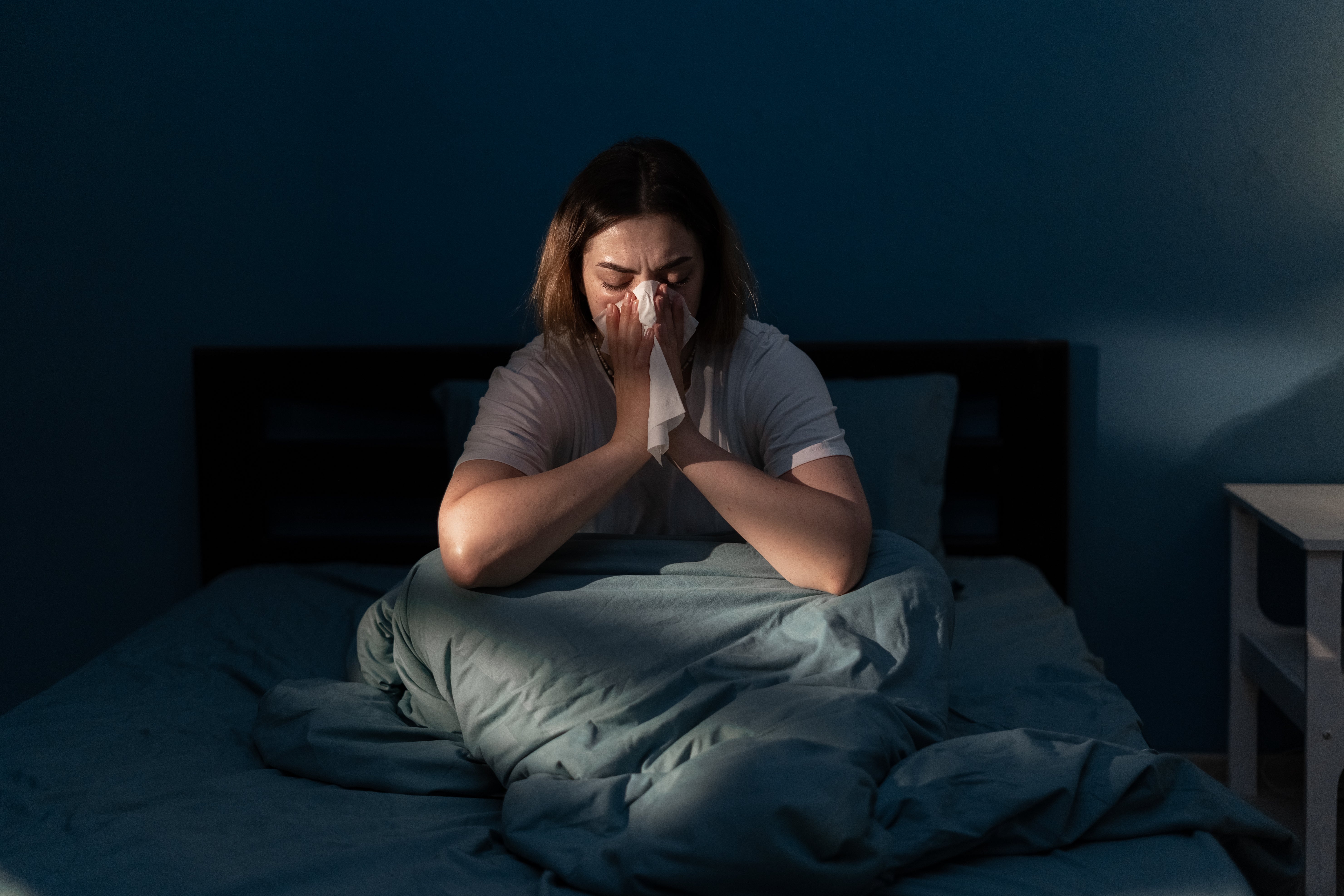
7 Reasons Your Allergies Are Worse at Night
Learn why allergies worsen at night, how to reduce exposure to common triggers, and how Quello allergy drops may help relieve nighttime symptoms.

Increased exposure to allergens, poor indoor air quality, and low humidity in your bedroom could be reasons why your allergies worsen at night. Getting rid of your triggers can reduce the frequency of your allergy flare-ups and allow your treatment to work better.

Symptoms of Nighttime Allergies
Nighttime allergies have symptoms similar to those during the day; the difference is that your symptoms appear to worsen at night. Common symptoms of nighttime allergies include:
-
Worsening nasal congestion when lying down
-
Sneezing, especially when lying down
-
Itchy throat or ears
-
Snoring or mouth breathing during sleep
-
Headaches upon waking
-
Coughing that interrupts sleep
-
Difficulty breathing at night
-
Dark, bluish or purplish circles under the eyes (allergy shiners)
Why Does Allergy Feel Worse at Night? 7 Reasons
There are several reasons your allergy may feel worse at night, including the state of your bedroom, indoor air quality, sleep posture and humidity levels.
Do your allergies feel terrible at night? Here are some possible reasons why.
1. There’s an Increased exposure to mold and dust mites in your home
Dust mites are found in nearly every home, and are not a sign that you are untidy. These pests attach to your bedding, carpet, rugs, and other soft surfaces.
You are more likely to have dust mites in your home if your room temperature is consistently between 68°F and 77°F (20 to 25 °C) and the humidity is between 70% and 80%. (1)
If you are allergic to dust mites, even exposure during the day or throughout the night can trigger your nighttime allergy symptoms.
Dust mite allergies can also lead to alarming symptoms like trouble breathing, chest tightness, or pain. (2) If you want to know whether dust mites may be causing your nighttime allergies, take our free allergy test here.
2. Your body produces Lower cortisol at night
At night, a hormone called cortisol, which helps regulate inflammation, falls. (3) When this happens, your body cannot stifle inflammation like it does when cortisol levels are higher. (4) As a result, inflammation-related allergy symptoms, such as nasal congestion and sneezing, typically flare up at night. (4)
3. Your pet sleeps in your bed
Pet dander is another cause of nighttime allergies. Some common symptoms of pet allergy include sneezing and a runny nose, especially after coming in contact with your pet's fur, dander, or saliva. (5)
Having your cat or dog in your bedroom (especially on your bed) keeps you in proximity to your allergen all night, especially if your allergies are triggered by pet dander. If you want to know whether your pets are triggering your allergies, take our free allergy test here.
4. Your Sleep position or posture
Lying down can worsen allergy symptoms, especially when you lie flat on your back or on your stomach. This sleep position appears to worsen nighttime allergies because gravity works against you; as a result, mucus and other nasal fluid pool at the back of your throat, leading to congestion and coughing. (4)
5. You are using a humidifier
In winter, the air is often dry, which can irritate your nose and throat at night. A humidifier can help with dryness, but if it adds too much moisture or isn’t cleaned well, it may increase mold and dust mite levels, which can make nighttime allergies worse. (6)
6. You left your window open at night
Pollen levels can increase throughout the night, depending on the type, reaching their peak during the few hours before sunrise. (7) If your window is open during the night, all of that pollen can make its way into your bedroom. After pollen particles are released, they eventually settle on surfaces like the ground, furniture, and your bed, making pollen a major trigger for both nighttime and morning allergies.
7. Poor air quality in your home
Particles in indoor air, such as mold, chemicals, carbon monoxide, or pollutants from outdoor air that get trapped inside the building, can be harmful. (8) If your home has poor air quality, these harmful particles will circulate, worsening your night allergies.

How to Manage Nighttime Allergies
Here are some ways to reduce your exposure to certain allergens that might increase nighttime symptoms and manage already existing symptoms:
Reducing Allergy Triggers at Night:
1. Change your clothes before heading to bed
Because pollen and pet dander can stick to your clothing, body, and hair, putting on clean, fresh clothes before you hit the hay can reduce your exposure to these allergens throughout the night.
2. Take a shower before bed
Taking a shower before bed can wash off any nighttime allergy triggers, such as pollen, dust, or even pet dander, that you may have accumulated during the day. Specifically, make sure to get your hair wet; this is a sneaky place pollen can hide.
3. Elevate your head with pillows when lying down
To prevent congestion, prop your pillows a bit to elevate your head and reduce blood flow to your nasal passages while you sleep. You can also try using a saline nasal flush (like a Neti pot) prior to bed to relieve nighttime allergy congestion.
4. Clean your humidifiers regularly
It is okay to use a humidifier or dehumidifier, depending on where you live and the time of year, to keep molds and dust mites to a minimum. However, if you are using a humidifier, make sure you clean it regularly to avoid it becoming a reservoir for allergens.
It is recommended to use distilled or demineralized water in your humidifier to prevent bacteria buildup, which often creates ‘white dust’ that can worsen your allergies. (6)
5. Other Helpful Recommendations to Reduce Allergies at Night
Other ways to reduce allergens in your homes, particularly where you sleep, include:
-
Use anti-allergen bedding and pillows, or purchase dust mite covers for your bedding
-
Clean your surfaces, curtains, and flooring frequently
-
Close your windows at night
-
Use a HEPA air filter in your bedroom
-
Bathe your pet once a week
-
Keep pets out of your bedroom
-
Vacuum and dust only during the day
Managing nighttime allergy symptoms:
Over-the-counter (OTC) and prescription antihistamine medications (such as Claritin, Allegra, and Zyrtec) can help you manage allergy symptoms, including sneezing, a runny or stuffy nose, and itchy eyes.
You can also treat nasal congestion with nasal sprays like Flonase. Consider taking your medications just before bedtime to help reduce nighttime allergies.
If you prefer longer-lasting relief to nighttime allergies, consider using allergy drops. Allergy drops will help you retrain your immune system, so you react less strongly to allergens. It's also convenient to use, and you can even use it right in your bedroom.
Discover Relief from Nighttime Allergies with Quello
Struggling with nighttime allergies that disrupt sleep?
Quello allergy drops offer a long-lasting solution for nighttime allergies. Our personalized allergy drops are designed to help ease your symptoms and support long-term relief.
Start taking control of your allergies at night today and get better, refreshing sleep.



Overcome your allergies at home with our doctor-led therapy.
Get started with our free allergy test kitGet Started with no test needed.
Overcome your allergies at home with our doctor-led therapy.
Get started with our free allergy test kitGet Started with no test needed.