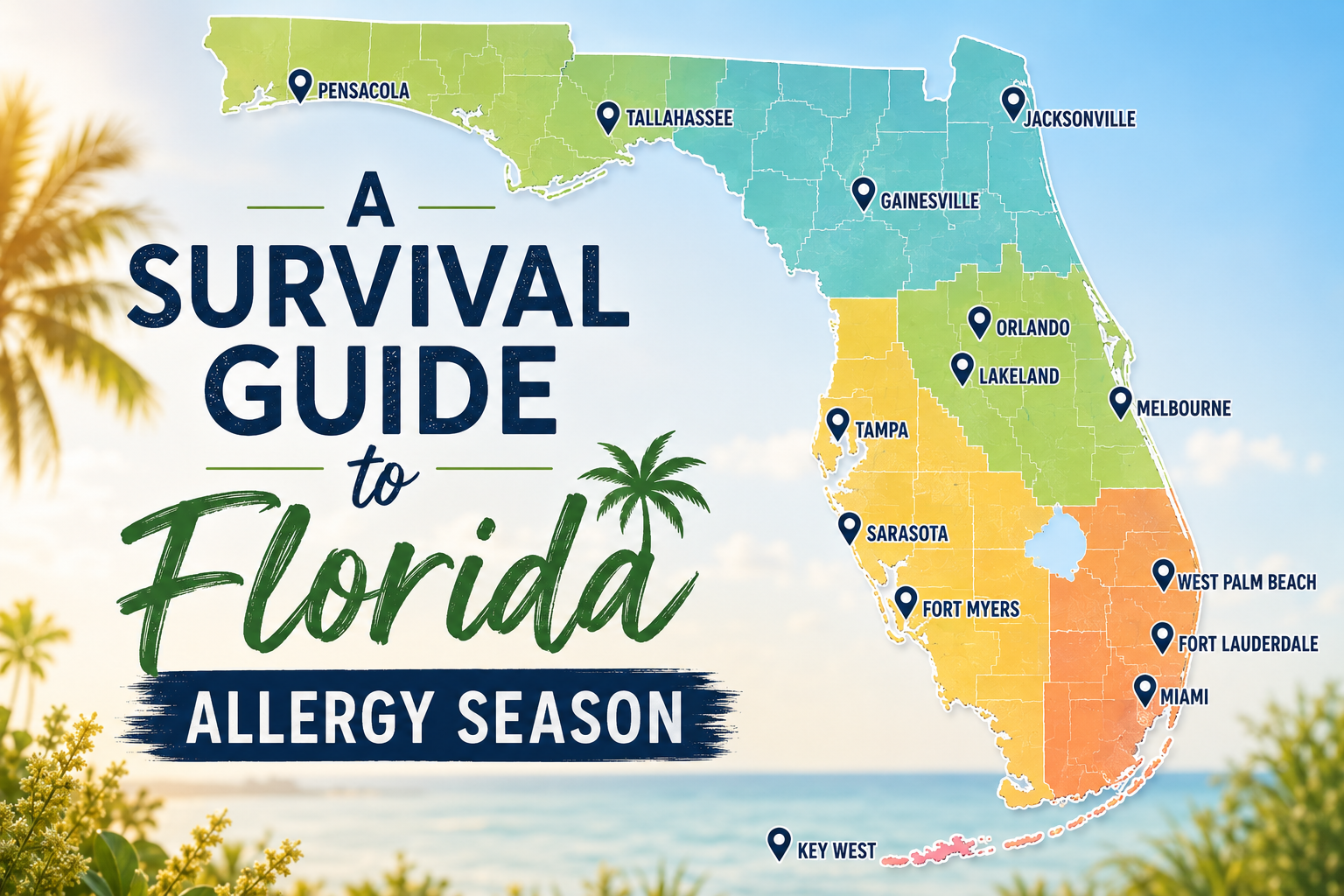
A Survival Guide to Florida Allergy Season
Allergy season in Florida is nearly year-round and may differ across regions. If you live in Florida and have persistent, year-round allergies, Quello Allergy drops can provide long-term relief.

According to the Asthma and Allergy Foundation of America (AAFA), Florida is among the top states for allergies in the United States. (1)
If you live in Florida, managing allergy symptoms can be more challenging because the warm, humid climate makes it easier for allergens like pollen, mold, and dust mites to thrive.
In this guide, we will break down allergies in Florida by season and by location, so you’ll know what to expect. We will also give you tips to enjoy Florida’s beautiful climate without constant allergies getting in the way.
If you are looking for a more long-lasting ‘cure’ for allergies in Florida, Quello Allergy Drops can help. Quello’s allergy treatment, including access to a board-certified allergist, is available to allergy sufferers in Florida.
Common Allergens in Florida
An allergen is a substance that triggers an allergic reaction, leading to symptoms such as a runny nose, itchy eyes, or nasal congestion.
Some of the most common allergens in Florida include:
- Tree Pollens: Pollens from oak trees, pine trees, cedar, cypress, and bayberry
- Grass Pollens: Pollen from Bermuda grass, Bahia, Johnson, and rye grasses.
- Weed Pollen: Pollen from Ragweed, Pigweed
- Mold
-
Dust mite
When is Allergy Season in Florida?
Allergy season in Florida is nearly year-round. However, the types of prevalent allergens may differ by season (spring or summer) and by region (south or north Florida). (2)
Florida Allergy Calendar By Season
Allergy season in Florida can feel unending. This is because Florida's mild climate allows plants to release pollen year-round, so allergy sufferers may not get a break.

Spring Allergy Season in Florida
Spring allergy season in Florida can last from late February to May; however, some weeds, such as ragweed and pigweed, can release pollen into June, causing spring allergies to overlap with the summer allergy season.
In the spring, the common triggers of allergies in Florida may include:
- Tree Pollen: Tree pollen peaks in spring, especially from trees such as oak, pine, cypress, and palm. Tree pollen season in Florida may last from late February into April.
- Grass Pollen: Common grass pollen allergens in the spring include Bermuda, Bahia, and Rye grass. Grass Pollen season in Florida may last from March to May and extend to October
- Weed Pollen: Common weed pollen allergens in Florida during spring include ragweed and pigweed. The weed pollen season can last from March to June. Ragweed season in Florida extends from August through November.
- Mold spores: Mold in Florida is present year-round; however, it is more prevalent in spring, as this season tends to have more frequent rainfall.

Summer Allergy Season in Florida
The Florida summer allergy season typically lasts from June to August. In the summer, grass is the most prevalent allergen in Florida.
Grass pollen usually peaks in June and July, making it harder for allergy sufferers to fully enjoy outdoor summer activities in the Sunshine State.
Common grasses that release their pollens during Summer in Florida include:
- Timothy Grass
- Bermuda Grass
- Johnson Grass
Ragweed pollen may also trigger an allergy in the summer, especially in August. In addition, due to Florida’s hot and humid weather, dust mites are also a major allergy trigger during the summer months.
Fall Allergy Season in Florida
Fall Allergy Season in Florida may last from August to November, with September and October often among the worst months.
The main culprit of the fall allergy season in Florida is ragweed pollen, especially the short ragweed. Mold spores are also an important trigger of allergies in the fall because damp leaves and rain create the perfect environment for mold growth.
Winter Allergy Season in Florida
While in most parts of the U.S., colder temperatures slow pollen production and reduce outdoor allergies, pollen is still present in Florida during winter due to its mild winters. Although pollen levels may be lower than in other seasons, many patients still experience symptoms year-round.
Places in South Florida tend to have higher lingering pollen levels than those in the Northern and central parts.
Aside from pollen, mold, mildew, and dust mites are also important allergy triggers in the winter.
Florida Allergy Calendar by Location
Allergy triggers in Florida can also vary by location, and where you live can greatly affect the severity of your allergies.

North Florida (Jacksonville, Tallahassee, Panama City)
In North Florida, allergies can be year-round. this region does not have significantly dry summers or freezing winters.
However, in the winter, weed pollens can decline, which may give you slight relief in outdoor allergies.
Common allergy triggers in North Florida include:
Trees: Oak, Hickory, some Willow species
Grasses: Rye, Bahia, St Augustine, Bermuda, marsh elder weed
Indoor irritants: dust mites, pet dander, and mold
Central Florida (Orlando, Lakeland, Kissimmee)
Allergies can also occur year-round in central Florida, as this region has overlapping pollen cycles. In Central Florida, trees are the main triggers of spring allergies. Grass and weed pollen allergies follow closely, making the spring allergy season feel overextended.
In the summer, grasses and weed pollens are the main culprits. Weed allergies appear to be worse in Central Florida than in North Florida, as Central Florida has more weeds.
In the winter, mold, dust mites, and some trees often trigger allergies in Central Florida. Weeds can continue to release pollen until early December.
Common allergy triggers in Central Florida include:
- Trees: Oak, pine trees, scrub hickory, pecan trees
- Weeds: Ragweed, saltwater false willow, Pacific wormwood
- Grass: Bermuda grass, Bahia grass, and Johnson grass
- Indoor irritants: dust mites, pet dander, and mold
South Florida (Miami, Fort Lauderdale, West Palm Beach)
Allergy season in South Florida seems longer than in Northern Florida. Tree, weed, and grass pollens are nearly year-round, with tree pollen peaking between February and May, Grass in the summer months, and weed pollen from August to December.
Common allergy triggers in South Florida may include:
- Trees: Oak, pine, cypress, cedar, Carolina willow
- Weeds: Ragweed, Jesuit’s bark, amaranth, oldwoman weed
- Grass: Timothy, Bermuda, and Johnson
- Indoor irritants: dust mites, pet dander, and mold
Tips for Surviving Florida Allergy Season
Living in Florida does not have to be gloomy for allergy sufferers. Here are tips for surviving Florida allergies, no matter the season or location.
If you own a garden, consider planting mostly low-pollen or allergy-friendly plants, such as roses, petunias, snapdragons, irises, hostas, and boxwood.
- Always shower after being outdoors to remove pollens from the hair and skin.
- If possible, avoid hanging clothes outside to limit pollen sticking to them and being carried indoors.
- Use air purifiers and change the filters regularly. Also, change your AC filter regularly, and consider a higher MERV rating to capture more pollen.
- Consider staying indoors during peak pollen times (10 am to 4 pm).
- Wear a mask when mowing your lawn or gardening.
- As much as possible, keep windows closed during your peak allergy season.
- Try to keep the humidity in your homes below 50% by using dehumidifiers or air conditioning.
- Vacuum your carpets and wipe down dusty surfaces to reduce indoor allergy triggers from dust mites.
- Consider using allergy medications for relief when needed.
Treatment for Allergies in Florida
Some available treatments that may help you manage your allergies include:
1. Nasal corticosteroids
Nasal corticosteroids are medicines sprayed into the nose to reduce nasal allergy symptoms such as stuffiness or congestion. Some nasal corticosteroids that may help with allergy symptoms include Fluticasone (Flonase), triamcinolone (Nasacort), and budesonide (Rhinocort).
2. Antihistamines
Oral and Nasal antihistamines can also help manage your allergies by blocking the effects of histamine, a chemical that triggers allergies.
Nasal antihistamines are sprayed in the nose to treat allergy symptoms. Examples of antihistamine nasal sprays that may help you with your allergy symptoms include azelastine (Astepro) and Olopatadine (Patanase).
Oral antihistamines (pills, capsules, or drops) that can help include Diphenhydramine (Benadryl), Chlorpheniramine (Chlor-Trimeton), Cetirizine (Zyrtec), and Loratadine (Claritin)
3. Decongestants
Decongestants are medicines used to reduce nasal congestion and sinus pressure. They are available as nasal sprays and oral tablets (pills).
Decongestants that may help include: Oxymetazoline (Afrin) and Xylometazoline as sprays, and oral decongestants such as pseudoephedrine (Sudafed) and phenylephrine (Sudafed PE).
4. Allergen immunotherapy (allergy drops or shots)
Allergen immunotherapy, including allergy drops and shots, is best for people seeking long-term allergy relief in Florida, regardless of the season or location.
Allergen immunotherapy is effective in treating a wide range of allergens, including pollens and indoor irritants such as molds and dust mites. Allergen immunotherapy can provide relief for decades.
Allergy drops are taken under the tongue, and allergy shots are injected under the skin and require weekly visits to your allergist's office.

Overcome Allergies in Florida with Quello Allergy Drops
For allergy sufferers, the nearly year-round allergy season can make the beautiful Sunshine State challenging to live in.
However, you do not have to move states to escape constant allergies, especially if you love Florida’s incredibly beautiful beachfronts, warm weather, and theme parks.
If you live in Florida and have persistent, year-round allergies, Quello Allergy drops can provide long-term relief.
Quello Allergy drops are a form of Allergen immunotherapy formulated to retrain your immune system to respond better to allergies.
Our Allergy drops do not just target symptoms, but instead treat the root cause of allergies, so you can spend more time enjoying Florida and less time managing sneezing, congestion, or itchy eyes.
Ready to get started? Schedule a free consultation with one of our allergy specialists.
Want to know how to survive allergies in other states? Read:
FAQ
When Is Allergy Season in Florida?
Allergy season in Florida is nearly year-round and may differ across regions (e.g., south, central, or north Florida). However, in general, the spring season may run from February to May, the summer (June to August), and the fall (September to November). In some regions, you may get a break in winter, but indoor allergens such as dust mites, mildew, mold, and pet dander may persist year-round, triggering allergies.
Why Are Allergies So Bad in Florida?
Allergies seem worse in Florida because of its year-round warm climate, mild winters, and high humidity (ranging from 60 to 80%). As a result, plants, grasses, and trees constantly release pollen even in the winter. In addition, the high humidity supports the growth of mold and dust mites, which can further worsen allergies.
What are the Worst Months for Allergies in Florida?
The worst months for allergies in Florida vary by region, pollen type, and individual sensitivity. However, spring and fall are among the worst seasons for allergies, both indoors and outdoors.
What allergies are bad right now in Florida?
In Florida, late-summer allergies are often driven by grass pollen and weed pollen. Grass pollen can remain high through August. However, as As Florida moves from late summer into fall (August into October), ragweed and other weed pollens typically become more prominent
Is Florida good for allergy sufferers?
Is Florida good for allergy sufferers?
Florida is not always ideal for allergy sufferers because its year-round warm climate can keep allergens such as pollen and mold active for much of the year. In AAFA’s 2026 Allergy Capitals report, Lakeland, Florida ranked 20th among the 100 most challenging U.S. cities for pollen allergies


Overcome your allergies at home with our doctor-led therapy.
Get started with our free allergy test kitGet Started with no test needed.
Overcome your allergies at home with our doctor-led therapy.
Get started with our free allergy test kitGet Started with no test needed.